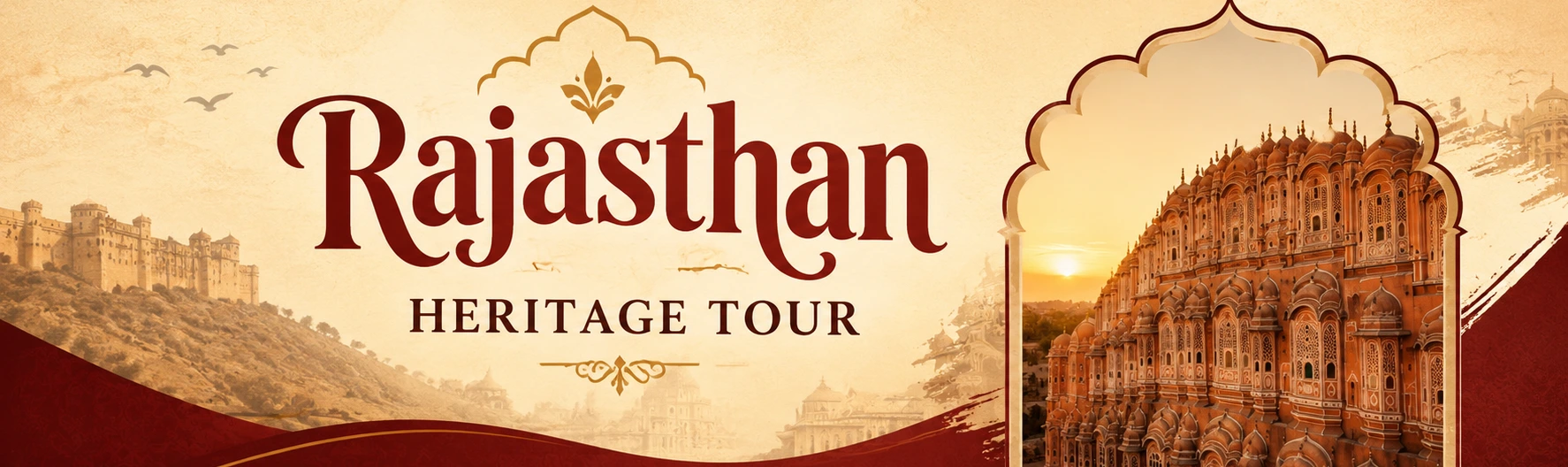

Out here, people show up dreaming of splendor, and Wander Nova’s Rajasthan heritage tour uncovers what lies beyond the obvious. From red rock ledges, forts jut like broken teeth. Inside, palaces flash with glass mosaics, patterns cut deep into window screens. They stand, solid and true. Yet few talk about the history that breathes beyond masonry - lines drawn in dirt paths, pressed down by feet walking the same way for hundreds of years, voices lifting in chants older than roads or engines.
Buildings rose for reasons beyond battle or beauty. Shaped by weather patterns, wind routes guided city plans. Curving alleys in Jaisalmer serve more than safety - they form pockets of shade, letting sunlight skip parts of the path even under a harsh sky. Design here hid practicality behind carved detail. Inside mansions, open yards let warmth rise and vanish, leaving lower levels quiet and cool. Machines to chill rooms never entered these walls, a nuance a Rajasthan heritage tour makes palpable.
Silent Trade Routes Still Functioning
Out here, old trails don’t just sit quiet in guidebooks. Instead, dusty lanes once packed with merchants hauling opium, wool, and blue dye now shift everyday treasures - only these days, meaning shifts too. Caravans back then? Their echoes live on. When festival lights brighten villages close to Nagaur, packets of spice and folded fabric arrive without fanfare. Same roads. Different rhythms. Not theater. Just life carrying forward, a continuity a Rajasthan heritage tour traces.
Those camels around Bikenar? Lots are cared for by clans that have led herds across the land for ages. Though visitors bring money now, the beasts aren’t just showpieces - they haul feed when rain fails, link far-flung homes where wheels can’t reach. Tradition doesn’t sit in cases here. It walks through dust, following old sky signs, a living thread a Rajasthan heritage tour might follow.
Havelis That Stayed Open
Painted stories stretch across walls of forgotten trader houses in Shekhawati. Peacocks strut beneath camera flashes, alongside gods caught mid-legend. Most visitors miss the truth - these courtyards still breathe with people. Homes remain lived-in, even as colors peel from years of heat. Behind cracked glass and makeshift frames built from old planks or bent iron, mornings unfold quietly. What looks like decay holds a rhythm older than tourism, one that a Rajasthan heritage tour can reveal.
Fixing things does not come from grant money. Little by little, a beam gets fixed, then a roof patch follows, each part using supplies found nearby. No big blueprint guides how it should be done. Choices are made only when needed. How care grows on its own shows what formal efforts often miss: lasting forever was never the point. Staying standing - that matters instead, a philosophy a Rajasthan heritage tour quietly honors.
Soundscapes of Memory
Before light comes, the town listens differently. Sounds of morning rise slowly, like something remembered. A bell taps once, then again - soft at first. As sky brightens, layers join: buckets creaking up from the old pool, wings brushing stone edges, hands sorting marigolds on wooden trays. Time folds into these moments. Little has shifted here through the years, a stillness a Rajasthan heritage tour might pause to notice.
Midway through the decade, a team captured field recordings near holy lakes. Those old British accounts? Problematic in perspective. Yet the rhythm lines up - the pauses, the sequence of sounds. Not belief. Practice shapes how echoes settle there, an acoustic layer a Rajasthan heritage tour could capture.
Silence weighs heavier than shiny hallways. Loud voices from visitors near hushed corners make residents adjust their paths without a word. They guard stillness by moving differently, not with posted rules. Guidebooks skip these moments entirely. The rule lives in shared behavior, never written down, a code a Rajasthan heritage tour might decipher.
Food as Archive
Out here, food tells stories not written down. Rajasthani dishes? They’re shaped by dry land - that part checks out. Yet there’s movement behind them too, people moving through tough times. What sits on menus today wasn’t always for show. Take dal baati churma - it travels well, turns out. Those firm wheat rounds were made to last weeks without spoiling. Heat brought them back to life, a tale a Rajasthan heritage tour savors.
These days, people pour in plenty of ghee. Back then, they used almost none since fat wasn’t always available. In certain villages, some cooks stick to low-oil recipes, guided by loose family traditions shared through cooking. The flavor shifts a bit from one place to another - what you taste in Ajmer isn’t quite what shows up in Churu, thanks to differences in local grains, a nuance a Rajasthan heritage tour might taste.
Out here, names don’t stick. Things just stay as they are. A meal in a quiet town tells older stories - ways bodies moved energy through dry lands, moments when full plates meant something unusual had happened, a silent archive a Rajasthan heritage tour unpacks.
Beneath the Surface
Deep down, shapes pull attention at places such as Chand Baori or Raniji ki Baori. Visitors stop, eyes tracing lines that fall into earth. Yet what shifts beneath stays unseen - the rise and drop of hidden water. These structures once held supplies when seasons turned harsh. As levels sank slowly, stone paths led people further below. Each tier built ready for change, a foresight a Rajasthan heritage tour can explore.
Some days now, these places stay empty or half full. Because farms pull too much water up, the underground levels have dropped below where older systems can tap. Still, people keep fixing them. When the supply is gone, what good does repairing the container do? That paradox might puzzle a Rajasthan heritage tour.
Change came slowly. These old stepwells today offer cool shade, quiet meetups, sometimes music at dusk. In Abhaneri, people gather when rains arrive to hear tales told aloud. The structure stayed long after water needs faded. Still used. Shifted meaning once more, a transformation a Rajasthan heritage tour witnesses.
Fabrics With Memory
Patterns like Bandhani, leheriya, gota patti - they often appear as heritage emblems today. Truth is, they functioned more like coded messages. Depending on design, someone could tell if a person was married, their family background, or where they came from. Take a scarf worn by a woman - it reveals not just custom, but specific details, maybe the name of her husband’s village or that he once worked overseas, a history a Rajasthan heritage tour might unravel.
Markets now overflow with machine-made copies. Yet in tucked-away spots near Jaipur and Bhilwara, real hand-tied bandhani lives on. Weeks pass while fingers pull thread into hundreds of minuscule knots. With time, each maker’s hands learn a rhythm machines can’t mimic. How fast they work shifts - morning light, tired eyes, years lived, all play their part, a patience a Rajasthan heritage tour appreciates.
Look closely - tiny differences give it away. Knots sit just off alignment, each one unique. Where machines chase exactness, people build flow. Imperfections become proof of handwork. What seems wrong is actually right, a subtle lesson a Rajasthan heritage tour offers.
Schoolchildren as Custodians
Among the dusty lanes close to Chittorgarh, young learners step past classroom walls into open air classrooms. Overgrown paths lead them forward, toward chunks of fallen stone and arches with no doors. Instead of reading lessons aloud, instructors invite quiet observation. Fingers trace rough surfaces while eyes catch lichen patterns along fractured edges. Sketching takes place beside crumbling steps where fig trees split ancient mortar. Each child notes what roots do beneath weathered blocks, a custodianship a Rajasthan heritage tour might champion.
Watching closely teaches quiet care. Damage from rain or trash catches children's eyes first. When tags appear on walls, a few tell the grounds staff. Not because they have to, but because it feels like their space. Old buildings stop being photo spots. Instead, they feel like part of the neighborhood yard, a shift in perspective a Rajasthan heritage tour can inspire.
It’s not just up to distant offices. People nearby keep stories circulating. When a site gets that UNESCO tag, money often follows. Meaning sticks around because locals name it, day after day, a lesson a Rajasthan heritage tour carries forward.
Languages Carved in Stone
Carved words at forts often mark time, tell of wins. Yet mixing languages showed up a lot. On one stone, you might find Persian alongside Sanskrit, even local Rajasthani speech. Not about welcoming all voices. More like spreading power through words. Those in charge spoke to many groups at once - temple keepers, fighters, traders, a complexity a Rajasthan heritage tour decodes.
Back then, a few writings included shorthand that only educated circles could grasp. Still, certain texts spelled out sounds the same way in different tongues so voices wouldn’t slip when reading aloud. Even though most people couldn’t read, hearing words spoken was key.
Most people do not read these scripts well anymore. Although translations show up on websites or near entrances, the original versions carry subtle meanings that vanish when changed. The way sounds shift in names, how verbs are shaped, the polite markers used - all of it slips away once turned into present-day Hindi or English, a loss a Rajasthan heritage tour might lament.
The Unseen Infrastructure
Hidden behind grand palaces, grain storage rooms once fed entire garrisons. Fort tours tend to spotlight ramparts and shrines instead. Waterways under royal halls guided runoff through stone veins. Livestock pens stood just beyond inner walls, forgotten now. Daily life depended on these quiet helpers, yet stories rarely include them.
Beneath Jodhpur’s Mehrangarh Fort, hidden routes carried food and goods when enemies surrounded the walls. Water came through one path that stretched toward a sacred pool near a temple. Though sealed now due to risk, the doorway still shows clearly through metal bars set in place long after. That tunnel's mouth - once vital - sits quiet but seen, a secret a Rajasthan heritage tour might glimpse.
Just because something looks like protection doesn’t mean it wasn’t also useful for moving goods. Long before trains arrived, the way supplies traveled influenced how cities grew. Palace cooking areas worked more like factories - feeding large crowds every single day. Those ovens remain whole today, even if cold. How heat moved through them kept flames under control. Getting things done came well before looking good, a truth a Rajasthan heritage tour underscores.
Seasonal Transformation
Summer heat fades, then color seeps back into places once called lifeless. When rains arrive, stone crevices cradle sudden bursts of moss. What looks like emptiness grows sound after downpours. Near Kota, dust-filled beds turn to shallow streams for a short while. Places thought frozen in time start breathing again with each wet cycle, a vitality a Rajasthan heritage tour might time perfectly.
Peak travel season arrives in winter. Researchers show up during summer, alongside locals on spiritual journeys. The time of year shifts how things feel. When packed, small features vanish behind noise. In slower periods, signs of age stand clear - the stairs smoothed by footsteps, paintings bleached where sun reaches.
When the crowds fade, photos reveal shades you never see in busy months. Surfaces catch light in ways summer sun can’t match. Each picture misses something - always a piece left out. Shifts happen naturally, not by accident, a spectacle a Rajasthan heritage tour captures off-season.
Come With Questions Not Expectations
Heritage here won’t sit still. It shifts while you watch, changes shape, keeps moving. If you want to see it clearly, move slower. Step off marked paths. Listen more to stall owners than official voices. Wonder aloud about pipes feeding homes, tiles mended after storms, melodies drifting when light fades.
Start anywhere but perfect. Notice how often hands pass over a broken rim, fingers brushing the same spot every day. Each dawn brings someone clearing dust from an open yard, doing it again without announcement. Small repetitions hold meaning better than polished fixes ever could.
Start somewhere quiet. Move slowly through Rajasthan's living rhythm instead of its monuments with Wander Nova. A local might open a door to their courtyard. You could taste what the season brings - food handed over on a leaf plate. Steps shift when weather changes, people wave, paths bend off printed routes.
Frequently Asked Questions
Is photography allowed inside all forts and palaces?
Some places do not allow photos, particularly old rooms turned into exhibit spaces. Cameras on poles are often not permitted there either.
How accurate are online maps of heritage zones?
Walking around, you might find shortcuts maps miss. Road changes sometimes take time to show up online. People who live here know the way by heart. Turn left where the old bakery stood - someone will point it out.
Can visitors attend local festivals during a heritage tour?
Timing matters. Look up local schedules first. Visitors can come along provided they keep clothing conservative while staying low-key around others.
Restrooms close to tree stepwells or old ruins - do they exist?
Most times, not really. Some spots have what you need, mostly where people visit often. Out past those places, things get bare. Be ready before heading out.
Is tap water safe to drink in heritage cities?
Stick to bottled or filtered water across Rajasthan. That choice works best when traveling there.
Do any heritage homes operate as guesthouses?
Stays are possible inside old havelis brought back to life across Shekhawati and Jaisalmer. Planning early helps - reserve through trusted booking sites.
How far in advance should tickets be booked for popular sites?
One to three days ahead works fine if you are coming from abroad. When it gets busy between November and February, better lock things in sooner. Arriving early on the planning side helps when crowds show up.
Are wheelchairs accommodated at older sites?
Some areas are hard to reach. Old pathways mean stumbling steps, rocky ground slows movement instead of smooth passage. Stone staircases block quick entry now. Museums slowly add better routes inside buildings over time. Progress comes piece by piece.
WanderNova Services
Best Flight Deals
Mumbai to Delhi Flight Tickets | Mumbai to Bangalore Flight Tickets | Kolkata to Mumbai Flight Tickets | Kochi to Abu Dhabi Flight Tickets | Lucknow to Riyadh Flight Tickets | Delhi to Ahmedabad Flight Tickets
Domestic Flights
Pune to Bangalore Flights | Chennai to Delhi Flights | Bangalore to Chennai Flights | Mumbai to Delhi Flights | Bangalore to Hyderabad Flights | Ahmedabad to Goa Flights | Mumbai to Kolkata Flights | Hyderabad to Delhi Flights | Bangalore to Goa Flights | Mumbai to Goa Flights
International Flights
International Flights Booking | Delhi to Dubai Flights | Delhi to Bangkok Flights | Delhi to Toronto Flights | Mumbai to Dubai Flights | Delhi to Singapore Flights | Delhi to London Flights | Delhi to Kathmandu Flights | Mumbai to London Flights | Chennai to Singapore Flights | Mumbai to Singapore Flights | Delhi to New York Flights | Kolkata to Bangkok Flights
Best Hotel Deals
Hotels In Dubai | Hotels In Mumbai India | Hotels In Pune India | Hotels In Singapore | Hotels In Kochi India | Hotels In Munnar India | Hotels In Bangkok Thailand | Hotels In Kuala Lumpur Malaysia | Hotels In Mecca Saudi Arabia | Hotels In Mahabalipuram India
Apply Visa Online
Dubai Visa Online | 14 days Dubai Visa | 30 days Dubai Visa | 60 days Dubai Visa | Dubai Transit Visa | UAE Visa | Singapore Visa | Malaysia Visa | Thailand Visa | Sri Lanka Visa | US Visa | UK Visa | Schengen Visa | Canada Visa | Australia Visa | New Zealand Visa | France Visa | Italy Visa | Turkey Visa Online | Philippines Visa | Cambodia Visa Online | Vietnam Visa Online | Oman Visa
International Tour Packages
Dubai Tour Packages | Singapore Tour Packages | Thailand Tour Packages | Malaysia Tour Packages | Sri Lanka Tour Packages | US Tour Packages | United Kingdom Tour Packages | South Africa Tour Packages | Europe Tour Packages | Bali Tour Packages | Mauritius Tour Packages | Maldives Tour Packages | Cordelia Cruise Packages
Domestic Tour Packages
India Tour Packages | Goa Tour Packages | Kerala Tour Packages | Leh Ladakh Tour Packages | Himachal Tour Packages | Andaman Tour Packages | Rajasthan Tour Packages | Uttarakhand Tour Packages | Jammu and Kashmir Tour Packages
Packages by Themes
Honeymoon Packages | Adventure Packages | Visa on Arrival Packages | Family Packages | Romantic Packages | Weekend Getaways Packages
Leave a Comment
Your email address will not be published. Required fields are marked *