

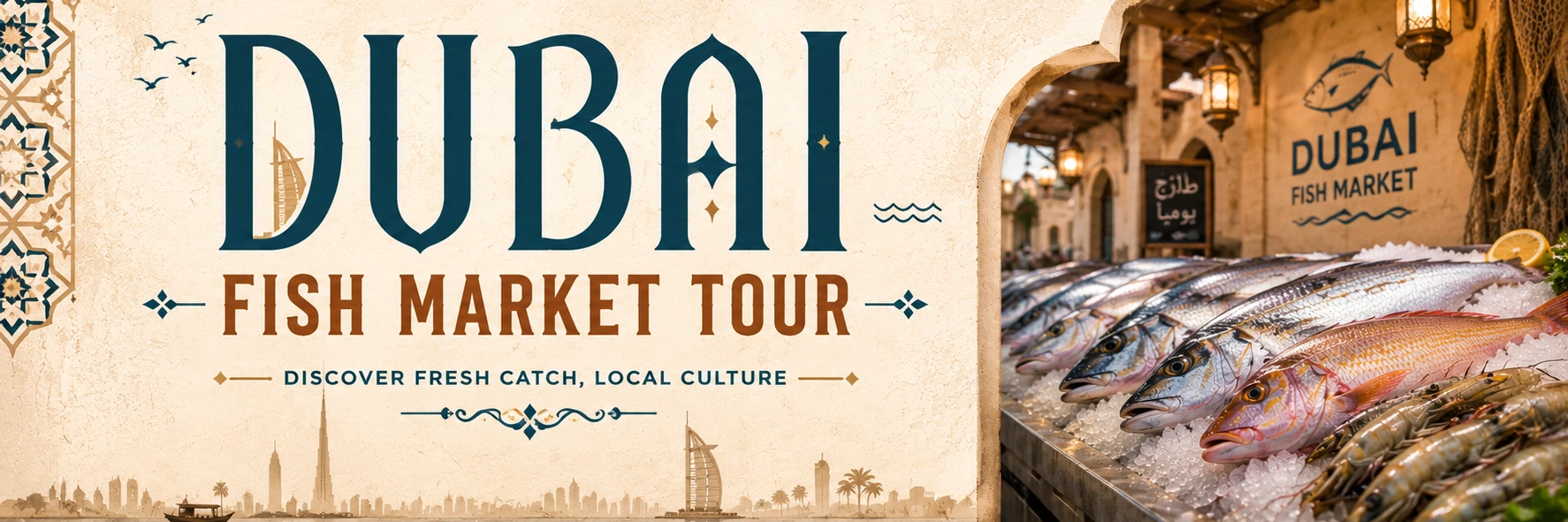
Morning light barely touches the Dubai Fish Market when smells start painting the scene. Not visuals - salt air, machine oil, wet stone, then a whiff of icy freshness like something alive just chilled down. Boats arrive hours earlier than most people wake, pulling up to Deira's edge with hauls already split by kind and scale. Trade flows here where ocean patterns cross man-made paths. Beneath glossy towers nearby, this pulse stays hidden yet feeds the whole drift of things. Here, the moment sits close, unfiltered by screens or scripted service. A finger moves toward fruit, another corrects it. Weight shifts on old brass scales. Words fly - Arabic clipped short, then a soft turn into Hindi, maybe Malayalam slipping through. Money changes hands without apps, without printouts. The deal settles fast, voice to voice, eye to what's real. Wander Nova invites you to experience this raw rhythm on a Dubai fish market tour.
Working Port Not Just for Visitors
Fish move fast here, though "tour" hints at something staged. Morning light finds locals already picking through crates - grouper, kingfish, hammour, sardines hauled in from the Arabian Gulf and Sea of Oman. Bidding starts low, almost silent, hours before outsiders show up. When travelers wander in near nine, most prime catches are gone, taken by cooks and corner sellers who know the rhythm. What remains is just what didn't sell before the sun climbed. Leftover stock stays fresh, laid out on chilled trays swapped hourly. Run by families, certain stands have stayed put for years through city-issued permits. No flashy signs needed - word spreads before logos ever could. Money changes hands fast, most buys costing less than one hundred dirhams for a full serving. Phones and cards sit unused not from refusal, just that crumpled notes flow quicker when lines build. A Dubai fish market tour reveals commerce in its most honest form.
The Ice Economy
Ice plays a quiet role, often missed on a Dubai fish market tour. It's not only about how vendors use it, but where it comes from. Every stand gets delivered anywhere from fifty up to two hundred kilos each day. The blocks emerge from large factories approved by Dubai's Department of Economic Development. This frozen load does more than chill seafood. While fish rest buried in cold chunks, they slowly lose mass - turning ice into part of the math. Scales tip heavier when ice clings to goods, shifting how much buyers pay. Though wetter, some shoppers choose fish with less drip, caring more about true weight than looks. Water from thawing trickles along indigo-stained troughs carved into the floor, winding toward filters that block waste from reaching the stream. Simple on surface, these features show how Dubai threads old ways through modern rules. Fines follow missed drainage duties - unseen often, yet never skipped. On a Dubai fish market tour, even the ice tells a story of hidden systems and careful calculation.
Quiet lives inside the noise
Out here, sound shifts in strange ways on a Dubai fish market tour. Not a steady roar, but waves of noise that come and go like breath. Shouts cut through now and then, yet whole minutes pass without words - just hands pulling tangled nets apart, eyes scanning silver bodies on wet tables, small feet shifting on hot concrete beside parked trucks. The clamor gathers where crates hit the dock, then fades as you step toward the billing sheds. Out here, the way work moves shows its own kind of map. Not far from where elders stand sharpening tools made right in Sharjah's backstreet forges, younger ones haul boxes across pavement on wheeled frames built soft so they won't clatter too loud next to homes. Sound matters more when you're close to sleeping windows. When the prayer voice spills down from the minaret, motion dips - talk cuts short, figures drift off just a moment - then come back like nothing broke, like breath caught after a cough. The soundtrack of a Dubai fish market tour is as layered as the trade itself.
Fish Missing From Restaurant Menus
Most visitors look for hammour alone, yet overlook farsi, sheela, or baladi. Depending on where you are, those names shift - same word, different fish, even across a single group of related species. What gets called farsi might mean any of half a dozen kinds, told apart only by how scales lie and the curve of the jawbone. Often, restaurant listings stop at "fresh local catch," which hides just how much variety swims beneath the surface. Yet the market tags each species using both Arabic names and Latin terms, following city guidelines. Sometimes parrotfish show up, though sightings dropped after stricter limits on harmful reef fishing took effect. Even now, oversight depends on skippers declaring their catch, noting where they fished and how once back at port. Monitoring by satellite does happen, yet applies just to boats longer than ten meters. Tiny wooden dhows slip past detection, leaving gaps in the data about what's truly sustainable. A Dubai fish market tour introduces species you'll never find on a menu, and a Dubai fish market tour teaches you to look beyond the familiar hammour.
Municipal Oversight and Hidden Paperwork
Hidden beneath the rough surface sits layers of paperwork. Each vessel must file a report detailing how much was caught, what kinds show up, where it came from exactly. That information flows straight into the national Fisheries Database run by the Ministry of Climate Change and Environment. Hour after hour, officials in crisp white outfits move through the area, looking for licenses that ran out or fish too small to keep. When a young kingfish turns up, authorities might take the whole catch. Fines can happen, yet newcomers often get cautioned instead. That grace comes from knowing rough seas bring surprises, even with careful net work. These days most reports go online, although some old-timers keep paper notes just in case. Rules aren't always followed perfectly, still trying counts for something out here. The unseen bureaucracy behind a Dubai fish market tour keeps the trade honest.
No Plastic Promise Mostly
Out here, plastic bags show up less often than before. Folks carry old newspapers folded tight, fabric bundles tied at the corners, even jars saved from last week's shopping. If someone does grab a plastic one, it's heavy stuff - built to block dampness, not tossed after one trip. City rules frown hard on flimsy versions, checking trash spots every few days to catch violations early. Fines grow larger each time a seller uses the wrong kind of bag. It wasn't green concerns that sparked change, rather daily struggles - soggy trash breaks open when wet, drawing rats and flies. Workarounds popped up on their own: bundling seafood in banana leaves, hard to find these days because shipping them is tricky; sometimes vendors tuck cuts into used grain sacks, given freely by food suppliers. Doing what works came before any talk about saving nature. On a Dubai fish market tour, sustainability emerges from practicality, not slogans. A Dubai fish market tour shows conservation born of necessity rather than preaching.
Timing Over Taste
Seven in the morning shifts the scene completely. Whole fish lie stretched out, untouched. Around midday, they're already cut apart - gills cleaned, stomachs opened, heads gone. To find prawns with heads on or red snapper still scaled, showing up early makes all the difference. Later arrivals still find perks. Prices start falling near 11:30 a.m., particularly when storms loom or mercury hits 40°C. High heat shifts buyer interest while spoiling goods faster. Fridges work overtime, pushing up power bills that sellers cover. Small cuts help move stock before it fades. Haggling happens, though not without boundaries. Bargaining hard won't cut the cost by half. Five coins may disappear, not fifty. What counts most is how you treat the seller. A Dubai fish market tour rewards the early riser with the freshest catch. Every Dubai fish market tour has its own tempo, dictated by the auction clock.
What cooks nearby reveals something else
Down narrow lanes beyond the market, food spots appear where workers grill fish scraps and pour strong spiced tea. A favorite here is samak mashwi, yellow with turmeric, kissed by flame inside old fuel barrels. Lime soaks into the flesh before heat seals it slow. Imperfect cuts find purpose - twisted fillets or edge bits rejected upstairs get used anyway. What remains after eating, like skeletons of the meal, travels off to factories. There, they melt down bones for farm nutrients fed to animals or spread under desert crops near Al Ain. Hidden from view, waste conversion still works. Hungry travelers follow a trail of scents - burnt flesh tangled with spice - pulled away from the crowded routes. Smoke curls through the air, carrying flavors that lead them sideways into quieter lanes. A Dubai fish market tour isn't complete without tasting this alchemy of scraps and flame. The culinary finale of a Dubai fish market tour happens in these back-lane kitchens.
A Call to Action Based on What We Noticed
Before eight, arrive at the Dubai Fish Market with loose change in hand. Small notes move faster here than questions. A reusable sack helps when plastic isn't offered. Snap no pictures without permission - eyes matter more than scenes. From a back stall, taste charred fish on flat bread. Meltwater from stacked ice pools near boots, then disappears into stone. Bargains pass silently - a look replaces words each time. Skip hunting for realness. It breathes in every gesture. Even if you stand still, the place stays put - yet looking closer shifts something inside your head. While skyscrapers glitter loud, the hidden bones of streets and wires run softer, yet hold up heavier things. Let Wander Nova guide your Dubai fish market tour into this world of quiet authenticity.
FAQs
Q. Dubai Fish Market safety for visitors?
A. Fine. Routine checks happen under Dubai Municipality oversight to keep things clean. Open times allow guests in, generally from six in the morning until six at night.
Q. Can I Take Photos?
A. Just because you can doesn't mean you should - check first if snapping pictures of workers or shoppers. Not everyone wants attention while buying or selling.
Q. Are prices fixed?
A. Freshness shifts every day, so costs change too. What you pay depends on how much was caught, what time of year it is, plus who else wants it. Haggling happens here - just keep it fair.
Q. Do vendors accept cards?
A. Many people choose cash first. Near spots have machines that give money, yet it helps to hold on to smaller bills in dirhams.
Q. Could the seafood be harming ocean life?
A. Maybe it's not harvested in ways that protect future supplies. Fishing boats near home stick to national rules about which fish can be caught and how big they must be. Still, who checks on these rules depends a lot on how large the boat happens to be.
Q. What are the busiest times?
A. Early hours from 6:30 a.m. to 9 a.m. bring the most people through the doors. By late afternoon, things slow down - fewer visitors show up then, sometimes prices dip too.
Q. Guided Tour Availability?
A. Just because you see a tour doesn't mean the city runs it. Some independent walks fold this spot into larger routes through local landmarks.
Q. Restrooms available here? Inside the facility?
A. Out here, you'll find just the bare essentials - nothing more. Nearby stores or subway stops might have restrooms that are easier to reach.
Q. Buying Live Fish Allowed?
A. Fish sellers sometimes stock live specimens in oxygen-filled containers, mostly keeping types such as hamour that attract steady buyers. A few focus only on showy kinds, relying on constant turnover to keep them fresh.
Q. Is parking available?
A. Beside the site, spaces cost money to park in. On foot, reach the Deira Clocktower Metro Station fairly quickly.
WanderNova Services
Best Flight Deals
Mumbai to Delhi Flight Tickets | Mumbai to Bangalore Flight Tickets | Kolkata to Mumbai Flight Tickets | Kochi to Abu Dhabi Flight Tickets | Lucknow to Riyadh Flight Tickets | Delhi to Ahmedabad Flight Tickets
Domestic Flights
Pune to Bangalore Flights | Chennai to Delhi Flights | Bangalore to Chennai Flights | Mumbai to Delhi Flights | Bangalore to Hyderabad Flights | Ahmedabad to Goa Flights | Mumbai to Kolkata Flights | Hyderabad to Delhi Flights | Bangalore to Goa Flights | Mumbai to Goa Flights
International Flights
International Flights Booking | Delhi to Dubai Flights | Delhi to Bangkok Flights | Delhi to Toronto Flights | Mumbai to Dubai Flights | Delhi to Singapore Flights | Delhi to London Flights | Delhi to Kathmandu Flights | Mumbai to London Flights | Chennai to Singapore Flights | Mumbai to Singapore Flights | Delhi to New York Flights | Kolkata to Bangkok Flights
Best Hotel Deals
Hotels In Dubai | Hotels In Mumbai India | Hotels In Pune India | Hotels In Singapore | Hotels In Kochi India | Hotels In Munnar India | Hotels In Bangkok Thailand | Hotels In Kuala Lumpur Malaysia | Hotels In Mecca Saudi Arabia | Hotels In Mahabalipuram India
Apply Visa Online
Dubai Visa Online | 14 days Dubai Visa | 30 days Dubai Visa | 60 days Dubai Visa | Dubai Transit Visa | UAE Visa | Singapore Visa | Malaysia Visa | Thailand Visa | Sri Lanka Visa | US Visa | UK Visa | Schengen Visa | Canada Visa | Australia Visa | New Zealand Visa | France Visa | Italy Visa | Turkey Visa Online | Philippines Visa | Cambodia Visa Online | Vietnam Visa Online | Oman Visa
International Tour Packages
Dubai Tour Packages | Singapore Tour Packages | Thailand Tour Packages | Malaysia Tour Packages | Sri Lanka Tour Packages | US Tour Packages | United Kingdom Tour Packages | South Africa Tour Packages | Europe Tour Packages | Bali Tour Packages | Mauritius Tour Packages | Maldives Tour Packages | Cordelia Cruise Packages
Domestic Tour Packages
India Tour Packages | Goa Tour Packages | Kerala Tour Packages | Leh Ladakh Tour Packages | Himachal Tour Packages | Andaman Tour Packages | Rajasthan Tour Packages | Uttarakhand Tour Packages | Jammu and Kashmir Tour Packages
Packages by Themes
Honeymoon Packages | Adventure Packages | Visa on Arrival Packages | Family Packages | Romantic Packages | Weekend Getaways Packages
Leave a Comment
Your email address will not be published. Required fields are marked *